
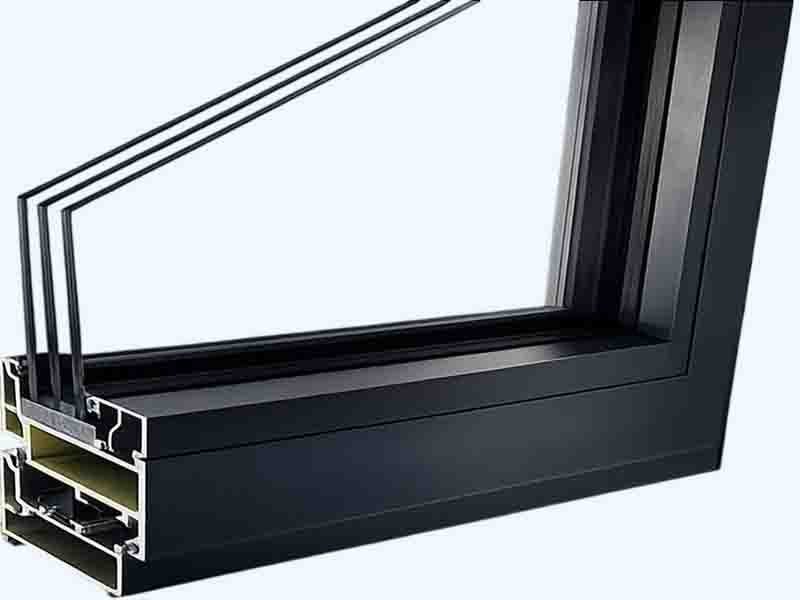
PU composite window profiles form the insulating core of thermally broken aluminum window systems, slashing the frame U-value while carrying the structural loads of the glazing unit. The polyurethane matrix bonds tightly to the aluminum shell during the pour-and-debridge process, creating a single composite section with vastly improved thermal performance.
A thermal break window frame built around a PU composite core solves the fundamental trade‑off that aluminum systems have wrestled with for decades: how to maintain the slim sightlines and proven strength of an aluminum window while hitting the U‑value thresholds in ASHRAE 90.1 or the IECC. The answer is a polyurethane pour that fills the cavity between the inner and outer aluminum extrusions, then is de‑bridged to create a single structural section with a thermal conductivity through the core below 0.30 W/m·K. The resulting frame assembly regularly achieves U‑values of 0.8–1.2 W/m²·K depending on the glazing spec, without the width penalty of a mechanically clipped thermal break.
On the structural side, a polyurethane window extrusion does more than insulate. The cured PU core bonds chemically to the aluminum shell, so the composite section resists the torsional and bending loads that a casement or tilt‑and‑turn window experiences under wind pressure and daily operation. The shear strength of the PU‑aluminum interface routinely exceeds 20 MPa, which keeps the frame corners tight and the gasket compression uniform over decades of service. For energy efficient window profile applications in multi‑storey commercial façades, that structural reliability is just as important as the thermal number—because a U‑value on paper means nothing if the frame distorts under load and breaks the air seal. The profile also accepts the same hardware, gaskets, and drainage slots as a standard aluminum system, so the fabricator's workshop workflow stays unchanged.
Profile Specifications & Thermal Data
| Profile type | Pour‑and‑debridge PU‑aluminum composite; standard or custom extrusion profiles |
|---|---|
| Frame depths | 55, 65, 75, 85 mm (2.2, 2.6, 3.0, 3.3 in) |
| Thermal conductivity (λ) of PU core | ≤ 0.30 W/m·K (EN 12667 / ASTM C518) |
| Frame U‑value (typical 75 mm) | 0.8–1.2 W/m²·K, depending on glazing interface and spacer selection |
| Shear strength (PU‑aluminum bond) | ≥ 20 MPa (2.9 ksi) |
| Core density | 1,200–1,400 kg/m³ cured polyurethane |
| Hardware compatibility | Accepts standard Euro‑groove or AAMA hardware, concealed hinges, and multi‑point locks |
| Finish | Aluminum shell available in anodized or powder‑coated RAL finishes; PU core fully encapsulated |
| Fire rating | Flame spread index ≤ 25 (ASTM E‑84) on PU core; aluminum shell non‑combustible |
Fabrication follows the same cut‑to‑length, crimp, and assemble sequence as standard aluminum systems. The de‑bridging step—where the aluminum bridge is milled out after the PU pour cures—is integrated into most CNC machining centres, adding minimal cycle time per bar. The completed frames integrate seamlessly into the wider PU composite profiles range, alongside door frames and thermal‑break connectors, for a consistent thermal specification across the entire building envelope. For projects that need documented structural performance, the composite sections can be detailed into the same load path as structural support systems that carry curtain‑wall mullions and transoms.
Proven in Field
“Our office tower retrofit needed to bring the existing aluminum curtain wall down from a U‑value of 2.8 to below 1.2 to meet the updated energy code. We replaced the thermal break with PU composite window profiles in the same aluminum shell dimensions. The frames hit 0.95 W/m²·K without changing the sightlines, and the blower‑door test confirmed zero air leakage at the frame corners through the first full heating season.”
— Excerpt from Commercial Façade Retrofit Study