
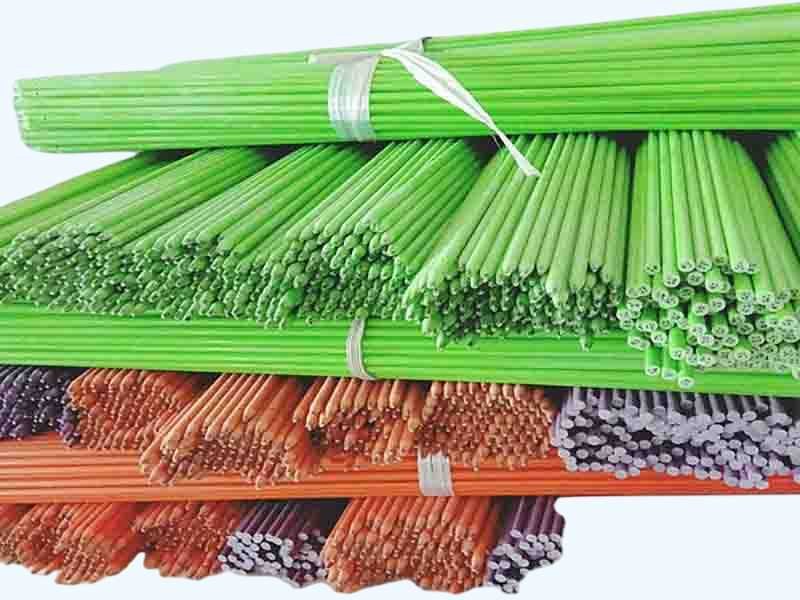
FRP solid rods are unidirectional pultruded bars optimized for pure axial tension or compression applications, including tie rods, anchor bolts, and structural bracing. The high fiber-volume fraction maximizes longitudinal tensile strength while remaining completely immune to electrochemical corrosion.
Why a Solid Cross-Section Matters Under Sustained Load
- Tensile strength that competes with steel, without the weight or rust. A typical FRP solid rod with a 16mm diameter delivers over 100 kN in ultimate tensile capacity. That's comparable to a grade 8.8 steel bolt, yet the rod weighs less than a quarter of its steel equivalent. For a tension tie-back assembly in a marine retaining wall, the installer carries a bundle of rods under one arm instead of needing a crane.
- Near-zero creep under permanent load. FRP solid rods are tested to ASTM D7337, which measures creep rupture under sustained tension in a corrosive alkaline environment — the kind of condition a ground anchor sees for its entire service life. The rods hold their pre-load without progressive elongation, eliminating the need for periodic re-tensioning that steel anchors demand as they relax.
- Electrochemical immunity where steel fails silently. In buried anchor applications — soil nails, rock bolts, tunnel tie-backs — stray currents and soil chemistry conspire to corrode steel tendons from the outside in. FRP solid rods are dielectric; there's no galvanic cell to form, no cathodic protection system to design and monitor. The rod's cross-section remains intact regardless of soil resistivity or pH.
- Threading and fabrication on site without hot work. FRP solid rods can be threaded with standard carbide tooling, cut to length with an abrasive saw, and assembled into custom tie-rod assemblies without a welding permit. For a construction site retrofitting an existing structure, this means anchor lengths can be fine-tuned at the point of installation rather than being factory-ordered to the millimetre.
Common applications where tension integrity cannot depend on a coating:
- Marine retaining wall tie-back rods
- Soil nail and ground anchor tendons
- Structural cross-bracing in corrosive plants
- Threaded rod assemblies for tank hold-downs
- Tunnel lining rock bolts
In each case, the rod is buried, submerged, or permanently inaccessible — making corrosion immunity a structural requirement, not a preference.
Operating Parameters
| Parameter | Typical Range / Value | Notes |
|---|---|---|
| Resin system | Vinyl ester (standard); polyester available | Vinyl ester for maximum corrosion resistance and creep performance |
| Standard diameters | 6 mm to 50 mm (¼″ to 2″) | Custom diameters on request |
| Tensile strength (ultimate) | ≥ 690 MPa (100 ksi) in the fibre direction | Per ASTM D7205 tensile testing |
| Tensile modulus | ≥ 40 GPa (5.8 Msi) | High fibre-volume fraction for stiffness |
| Creep performance | Near-zero creep under sustained load per ASTM D7337 | Suitable for permanent tension applications |
| Length | Standard up to 6 m (20 ft); longer on request | Custom cut lengths available |
| Maximum continuous service temperature | Vinyl ester: 100°C (212°F) | Short‑term excursions acceptable |
| Weight | Approx. 0.1–2.5 kg/m (0.07–1.7 lb/ft) depending on diameter | Approximately one‑quarter of equivalent steel rod |
| Surface finish | Smooth (standard); sanded for bonding available | Threading with standard carbide tooling |
Proven in Field
"The steel tie‑backs on our waterfront bulkhead were corroding to the point of section loss within eight years. We replaced the entire system with FRP solid rods — installed by hand, threaded on site, and re‑tensioned once. After six years of tidal exposure, the rods show zero measurable degradation."
FRP solid rods are part of our FRP Structural Profiles range. See the full product family for I-beams, square tubes, round tubes, angles, channels, and flat bars.