
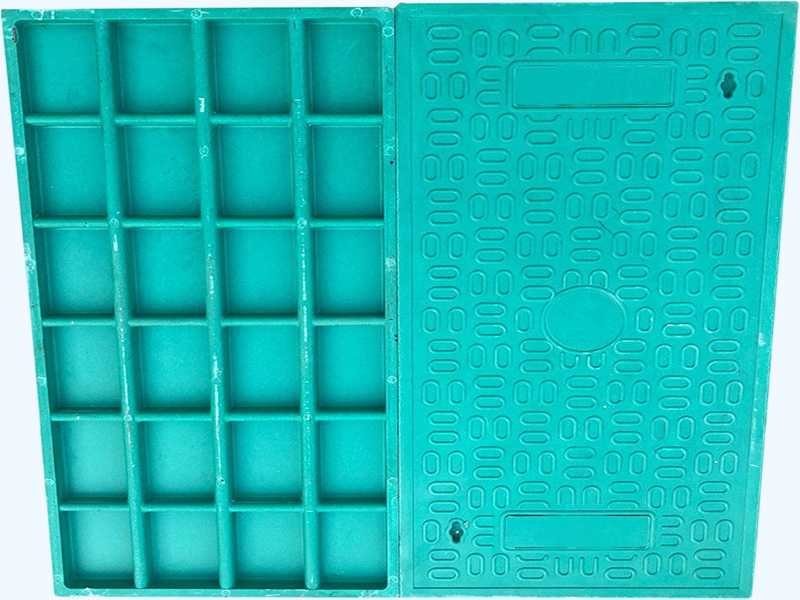
FRP trench covers span cable ducts and utility trenches while remaining light enough for two workers to lift without mechanical assistance. The non-metallic construction removes the scrap-value incentive that makes cast iron covers a theft target in remote installations.
A fiberglass trench cover earns its place when access frequency and corrosion conspire against conventional materials. In a chlorine contact basin, steel covers rust‑weld to their frames within months; removing them for a routine inspection means cutting or prying. An FRP panel lifts out by hand, every time, because the resin‑rich surface cannot bond to concrete or metal seating faces. That repeatable, low‑effort access is what maintenance planners notice first. When the cover doubles as FRP trench grating—with an open‑mesh surface—daylight and ventilation reach the cables below, keeping the trench interior drier and reducing condensation‑driven corrosion on the contained services.
On the structural side, these removable trench covers are built as pultruded or molded panels with integral stiffening ribs. Load ratings follow EN 124 or AS 3996 classifications, from light‑duty pedestrian to forklift traffic. The panels can be supplied with flush‑mount stainless steel locks for public walkways, or simple drop‑in recesses for plant rooms where only operators need access. Because the resin system matches the trench linings and channels in the rest of the FRP infrastructure scope, there is no galvanic or chemical incompatibility at the cover‑to‑frame interface—an advantage when the contained liquid is aggressive enough to warrant a full‑system specification.
Typical Panel Specifications
| Panel construction | Molded open mesh or solid top with anti‑slip grit; pultruded rib‑reinforced options for higher loads |
|---|---|
| Standard sizes | Widths to 600 mm (24 in), lengths to 3 m (10 ft); custom dimensions available |
| Thickness | 25–40 mm (1–1.6 in) depending on load class |
| Load rating | Light duty: 5 kN/m² (pedestrian); Medium duty: 40 kN/m² (light vehicles); Heavy duty: 160 kN/m² (forklift) — per EN 124 |
| Resin system | Isophthalic polyester (standard); vinyl ester for strong chemical exposure |
| Surface finish | Integrally molded grit (standard); UV‑stabilized gel‑coat for outdoor use |
| Locking options | 316 stainless steel flush bolts or recessed lift handles with padlock provision |
| Weight (typical) | Approx. 15–30 kg per panel (33–66 lbs), easily handled by two persons |
Installation does not require grouting or welding. The panels drop into the prepared frame or onto a continuous angle seat; shims are rarely needed because the molded edges are uniform. For trench networks that incorporate drainage systems and cable ladder runs, the ability to remove a cover without calling in a rigging crew reduces scheduled downtime noticeably—particularly in water and wastewater plants where trench access is a daily or weekly task.
Proven in Field
“The cast‑iron trench covers over our chlorine contact basin became a safety and maintenance headache—they rusted solid every winter and took two mechanics half a shift to free. Since switching to FRP covers, a single operator lifts them for the weekly inspection. We’ve also eliminated the scrap‑metal theft risk that plagued the remote compound.”
— Excerpt from Chlorine Contact Basin Trench Upgrade