
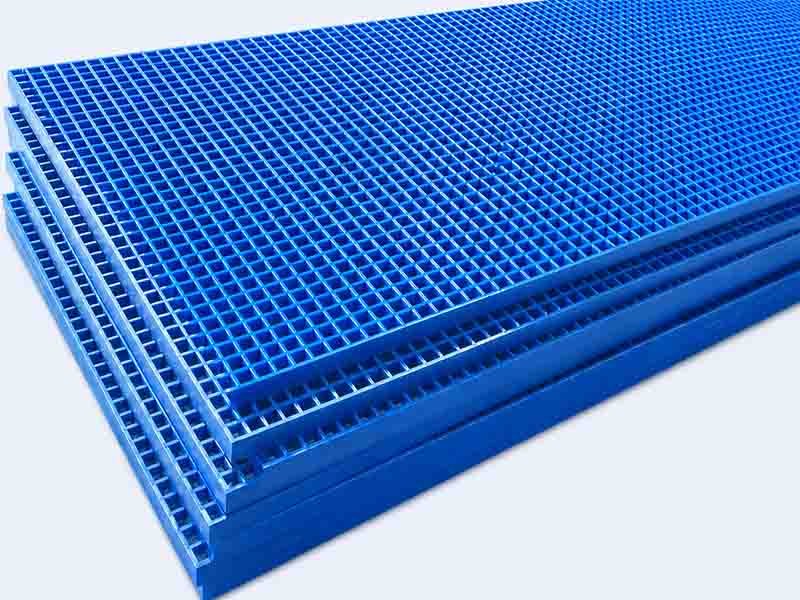
Molded FRP grating is formed by layering continuous glass fiber strands in a thermosetting resin matrix within a steel mold, creating a one-piece panel with bidirectional load capacity. It is the workhorse grating for chemical plants, electroplating shops, and pickling lines where the chemical environment destroys metal grating within months.
Why Molded Grating Survives Where Metal Can’t
- Corrosion resistance built into the resin, not the coating. With vinyl ester or polyester formulations, the entire panel resists sulfuric acid, sodium hydroxide, and aggressive salt sprays. There’s no galvanizing to wear off — the protection is structural.
- Bidirectional strength without extra framing. The square mesh pattern distributes loads evenly in both directions. In walkway and platform applications, you can often use fewer support beams compared to pultruded grating, trimming installed cost.
- Grit‑top surface as standard. A molded‑in silica grit layer gives a slip‑resistant walking surface that doesn’t rely on removable inserts. It stays effective even when the floor is wet with oil or chemical residue.
- Low maintenance, predictable life. No painting, no rust scaling, no replacing corroded bars. We see panels in continuous acid service still performing after a decade with zero intervention.
Operating Parameters
| Parameter | Typical Range / Value | Notes |
|---|---|---|
| Resin options | Polyester, vinyl ester, phenolic | Vinyl ester for strong acids/alkalis; phenolic for high heat & low smoke |
| Mesh size | 38 mm × 38 mm (1.5″ × 1.5″) standard; 50 mm × 50 mm available | Square pattern for bidirectional strength |
| Panel thickness | 25 mm to 50 mm (1″ to 2″) | Thicker panels for higher loads or longer spans |
| Maximum continuous service temperature | Polyester: 80°C; Vinyl ester: 100°C; Phenolic: 150°C | Short‑term excursions higher |
| Slip resistance | DIN 51130 R13 (with grit top) | Achieved via integral grit layer |
| Fire rating | Achievable ASTM E-84 Class 1 (with flame‑retardant resin) | Depending on resin choice |
Where You’ll Find Molded Grating Underfoot
- Electro‑winning tankhouse floors — constant exposure to sulfuric acid mist
- Plating shop walkways — chromic acid, nitric acid, and rinse water
- Petrochemical sump covers — H₂S, hydrocarbon condensate, and saltwater
- Pickle line platforms — hydrochloric acid at elevated temperature
- Chemical storage area flooring — spill containment zones with mixed acids
In all these settings, molded grating replaces steel bar grating that would need replacement every 1–2 years. The avoided downtime alone usually justifies the material cost.
Proven in Field
"Our tankhouse walkways were chewing through galvanized grating in 18 months. The molded FRP panels we installed six years ago still look new — and the anti‑slip surface hasn't degraded."
Molded grating is part of our FRP Grating range. See how it compares to pultruded and heavy‑duty options in the full product family.