
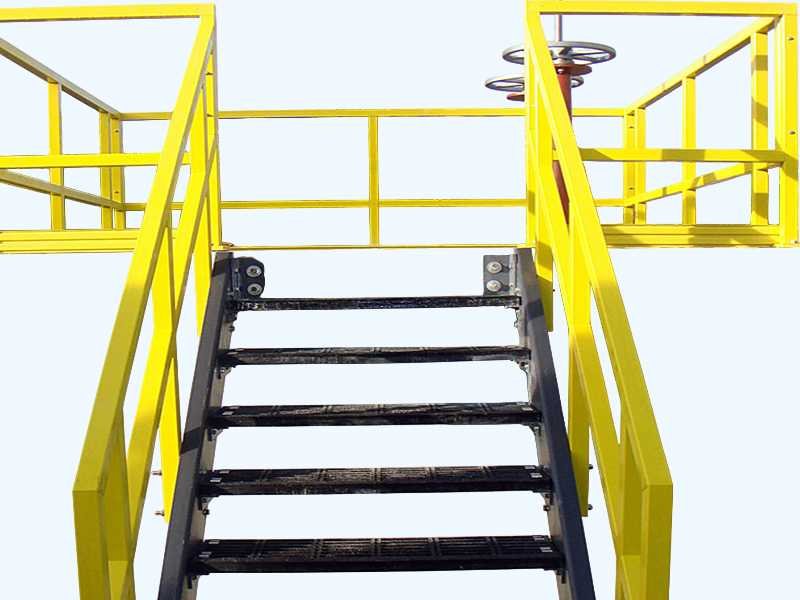
FRP guardrails provide impact-rated edge protection for mezzanines and open-sided platforms. They also see heavy use on loading docks. The UV-stabilized resin system keeps them from yellowing or becoming brittle after years of sun exposure, so they look consistent without painting.
A proper fiberglass guardrail does more than keep people from stepping off an edge. It absorbs the occasional forklift nudge without permanent deformation, and because the entire section—rails, posts, and base plates—is non‑metallic, there is no corrosion cell to start at a scratched surface. In a fertilizer storage building or a coastal desalination plant, a scratched steel rail turns into a rust streak within weeks. The FRP version looks the same after a scratch as it did before, and the structural capacity stays intact.
Unlike steel systems that rely on periodic repainting, these FRP guardrail systems carry integral UV inhibitors right through the laminate. The colour is not a coating—it’s part of the resin. That means even after a decade of direct sun on a rooftop mezzanine, the guardrail won’t chalk or peel. Maintenance crews in chemical plants and water treatment facilities consistently report that the only attention FRP guardrails need is an occasional washdown with the same hose they use for the floor grating.
Standard Configuration & Load Ratings
| Top rail height | 1,067 mm (42 in) above finished surface — OSHA 1910.29 compliant |
|---|---|
| Mid‑rail height | 533 mm (21 in) |
| Toe board | FRP C‑channel, 100 mm deep, continuous |
| Post spacing | 1.5 m (5 ft) standard; 1.2 m (4 ft) for high‑impact zones |
| Post section | Square tube 65 × 65 mm (2.5 × 2.5 in), 4.8 mm wall |
| Rail profile | Round tube Ø 50 mm (2 in), 4.8 mm wall |
| Design load | 900 N (200 lbf) applied in any direction per OSHA 1910.29 |
| Resin system | Isophthalic polyester with UV package; vinyl ester for corrosive atmospheres |
| Fire rating | Flame spread index ≤ 25 (ASTM E‑84) |
Because the guardrail sections ship pre‑cut with all mounting hardware, a small crew can set 30 metres of perimeter in a single shift using basic hand tools. The base plates accept 316 stainless steel wedge anchors, and the post‑to‑rail connections use internal splice sleeves with set screws—no field drilling or welding. For facilities that already standardize on FRP access components, adding the matching guardrail keeps the entire pedestrian safety system non‑conductive and corrosion‑free. The system also ties in cleanly with existing platform systems and stair towers.
Proven in Field
“We replaced the perimeter guardrails on four chemical storage mezzanines six years ago, primarily to stop the repainting cycle. The FRP guardrails haven’t required any maintenance since installation, and the plant manager noted a measurable drop in annual corrosion‑related safety citations.”
— Excerpt from Chemical Plant Walkway & Mezzanine Upgrade